Spring Exceptionelle
Lot 259:
Description
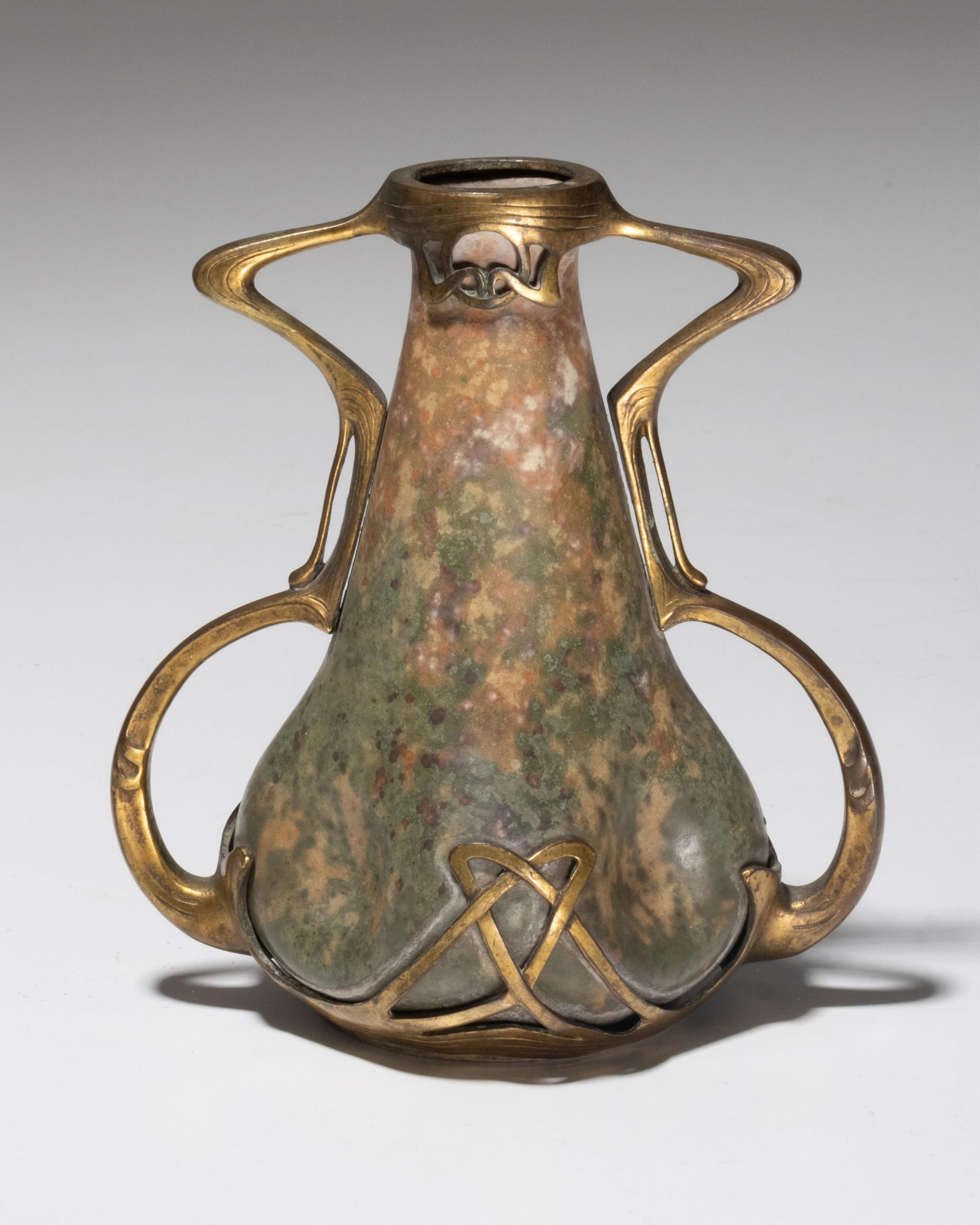
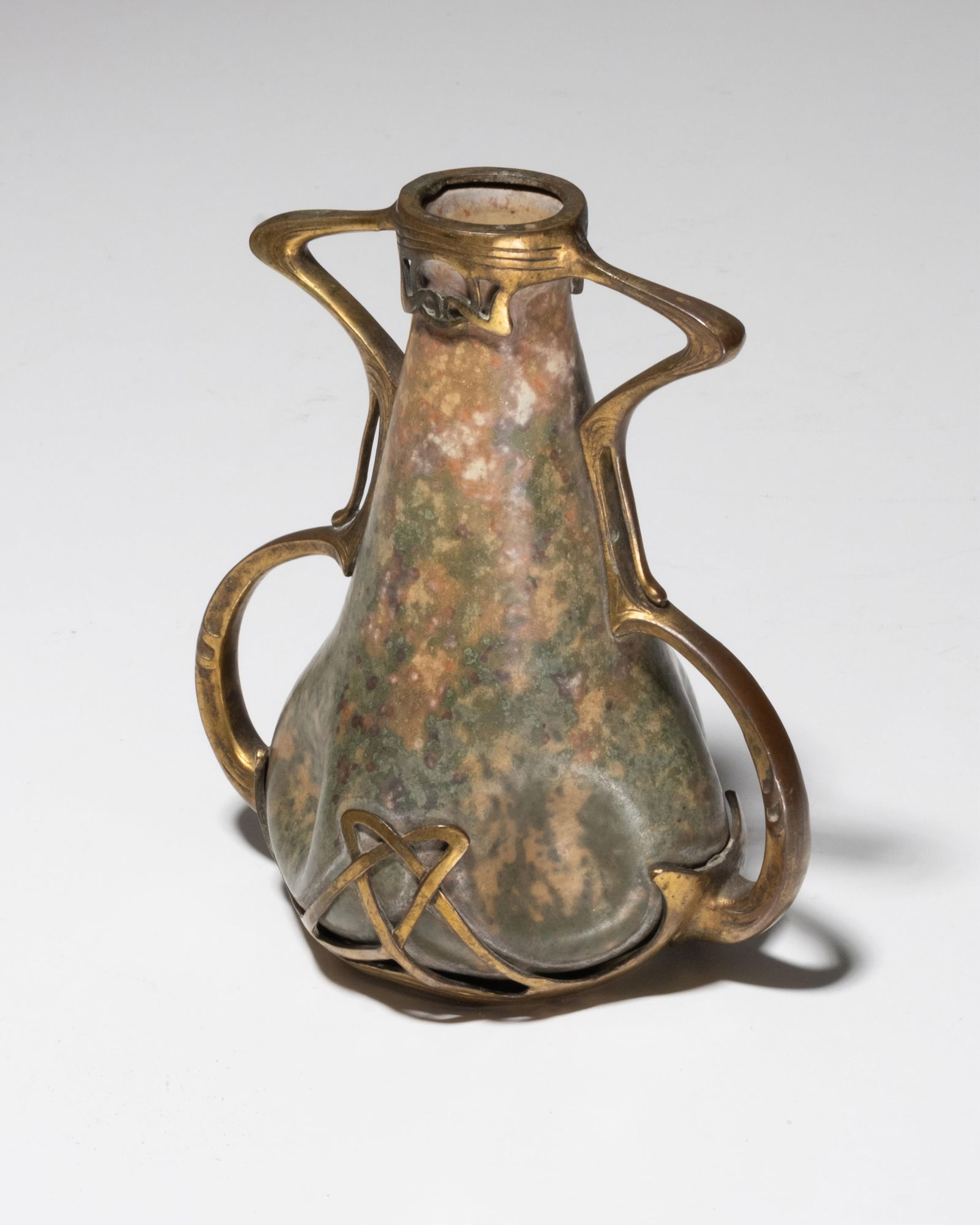
Keywords: Art Nouveau Pewter, Early 20th Century, Ceramic Vase, Looping Handles, Johann Loetz Style, Jugendstil Aesthetic, Secession Vase Style
Summary:
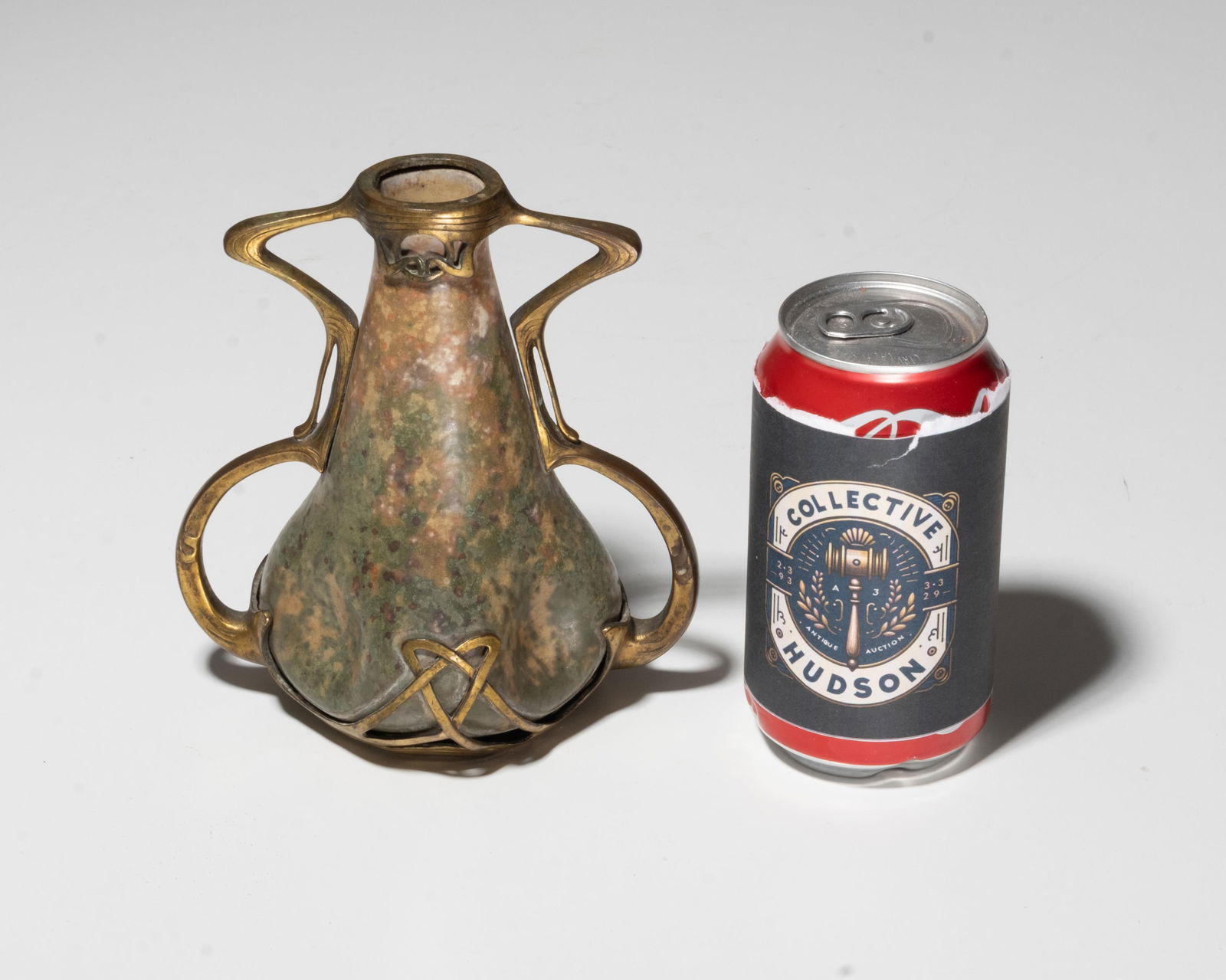
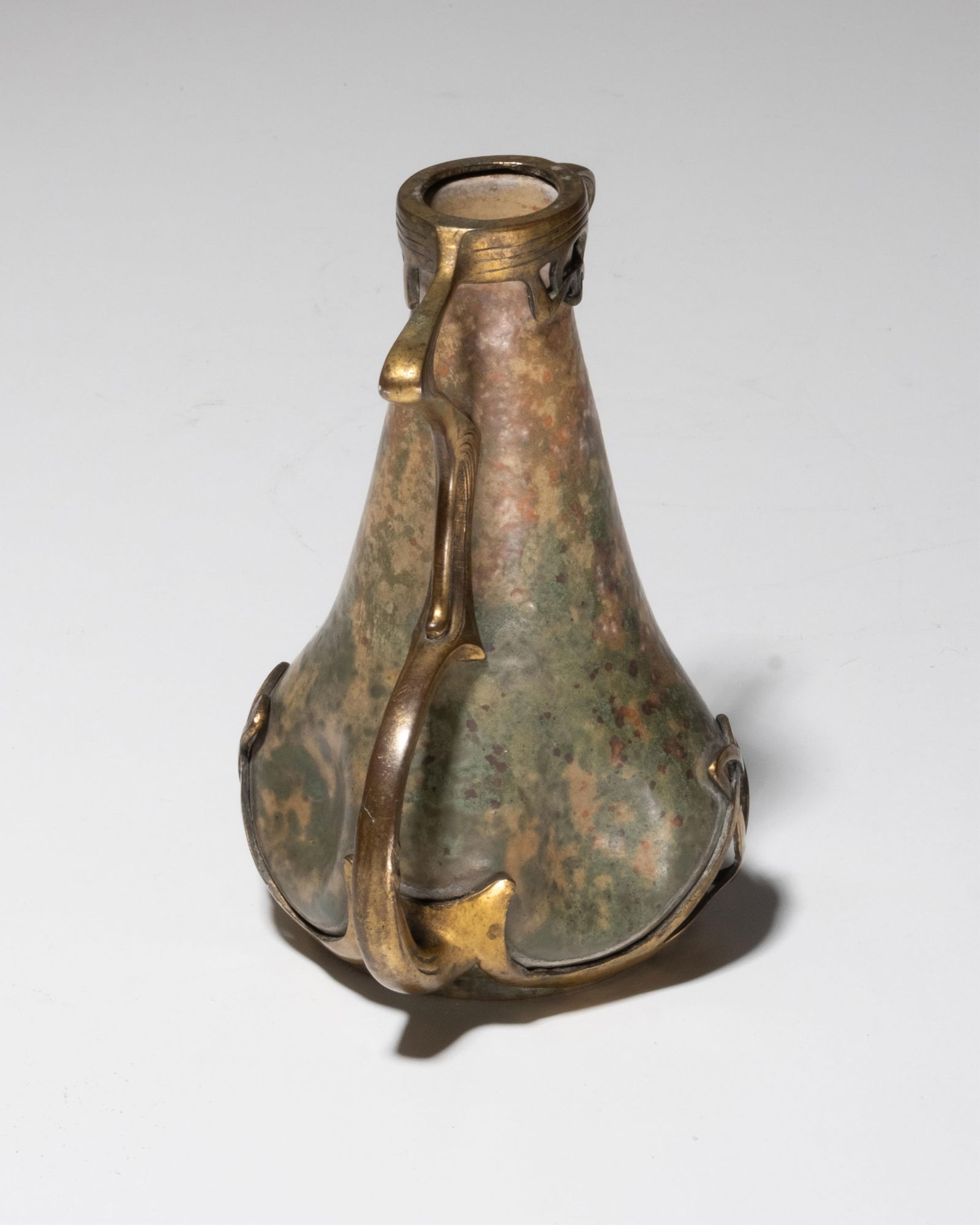
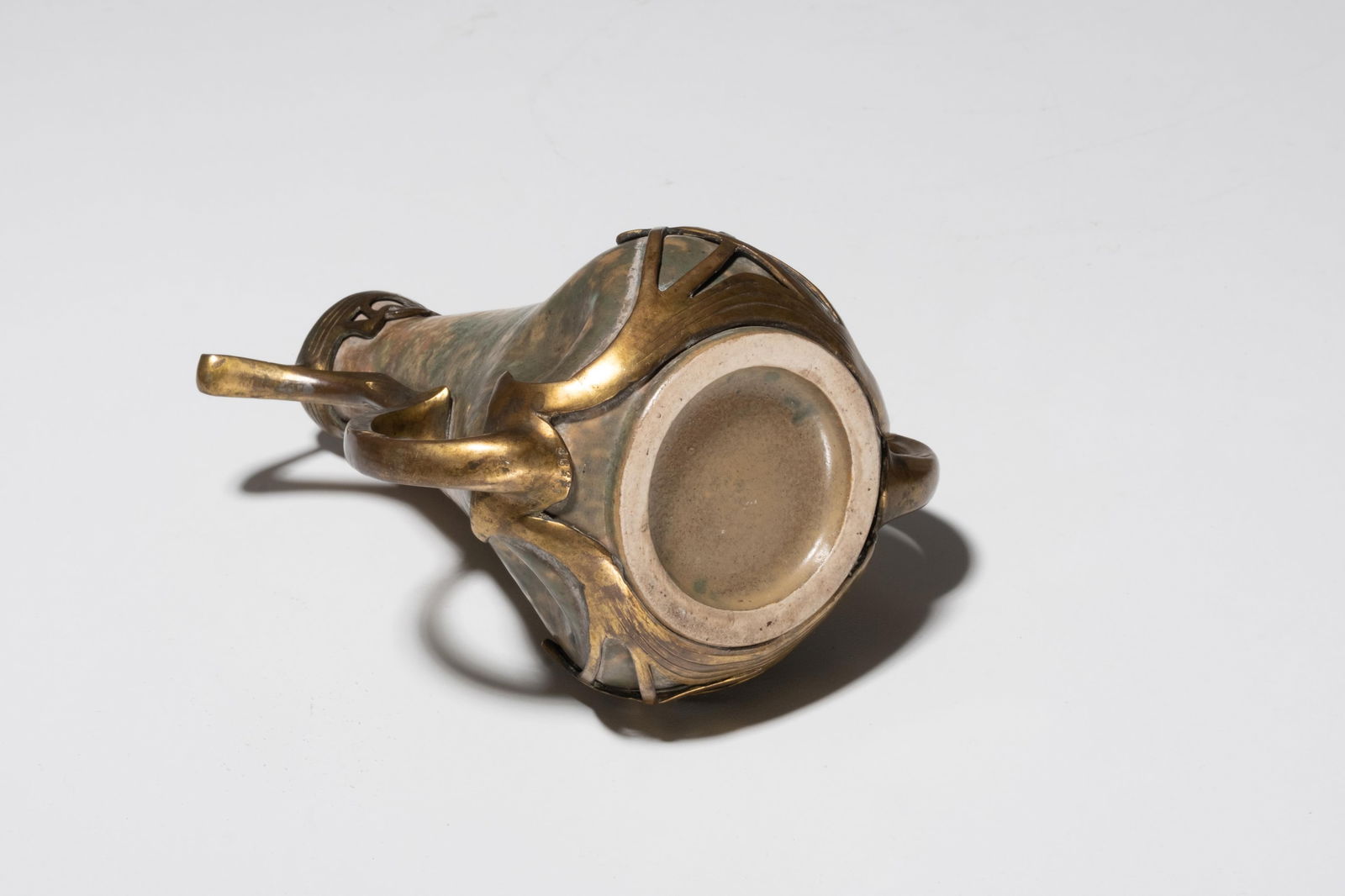
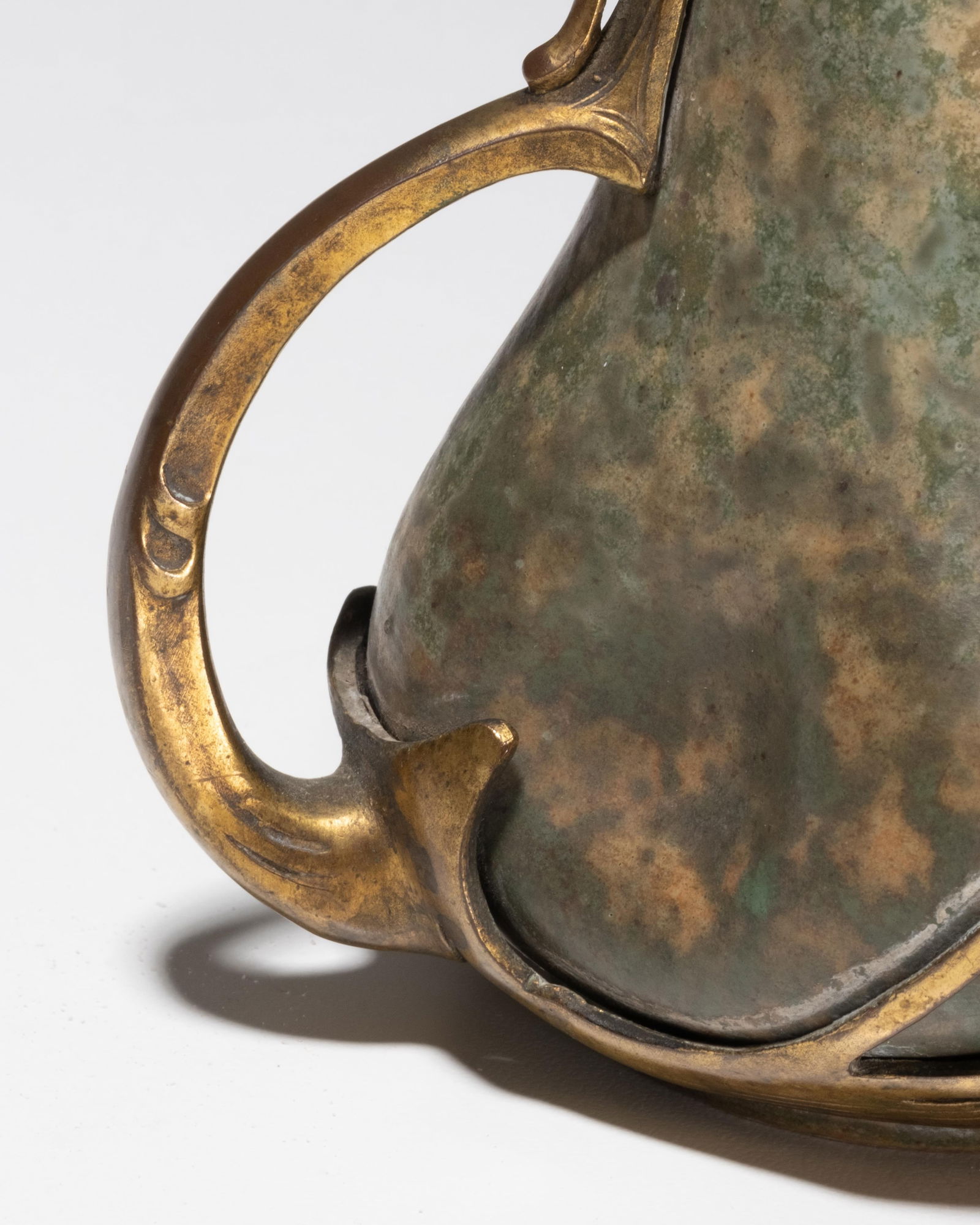
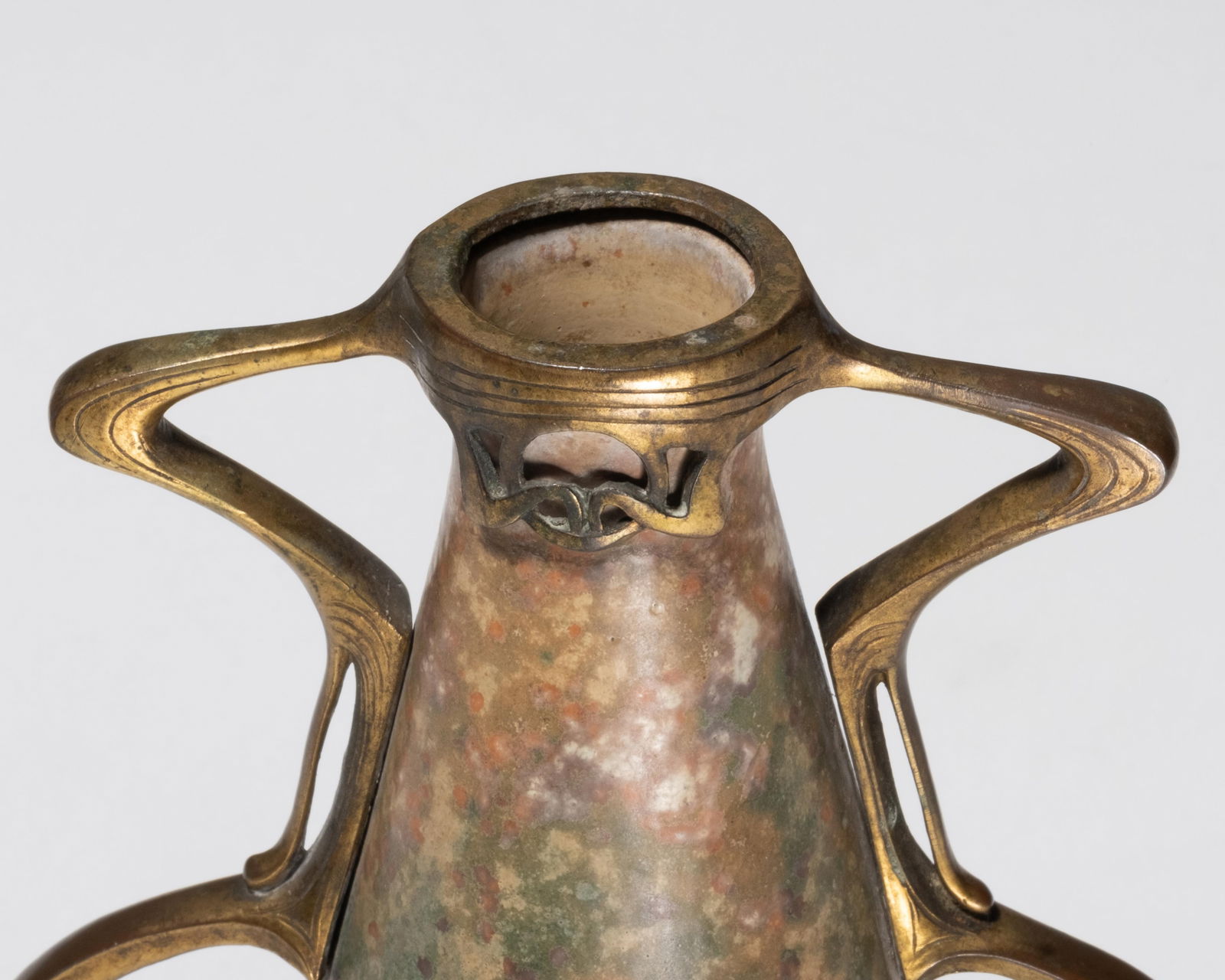
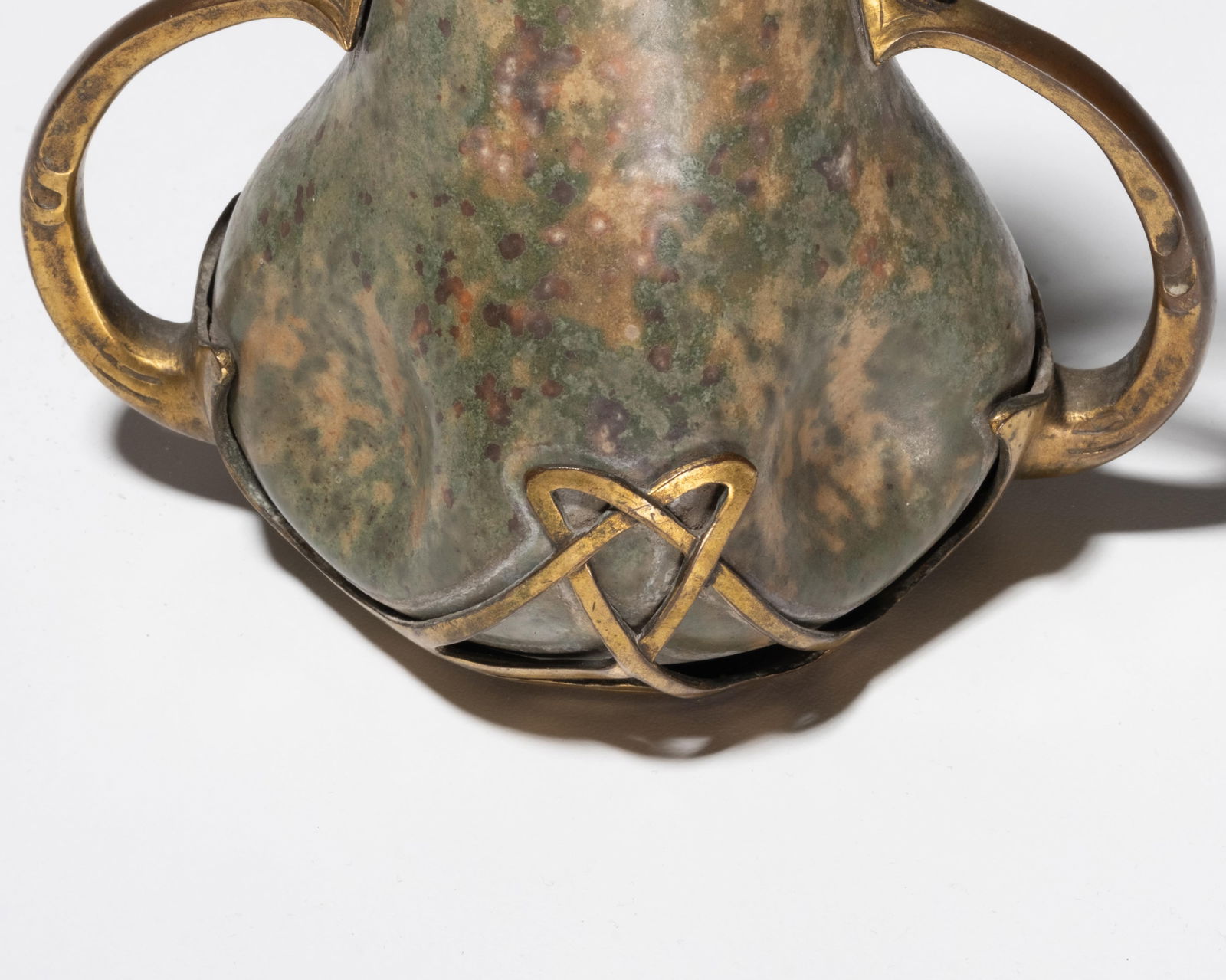
Art Nouveau ceramic vase with bronze mounts, circa 1900. Pear-shaped ceramic body decorated with a mottled metallic glaze in green and copper tones, fitted with looping bronze handles and applied bronze base mounts in a Jugendstil-inspired design. The surface exhibits an iridescent, variegated finish characteristic of turn-of-the-century European art pottery.
Measurements: 6 1/4 x 5 1/2 x 4 in. (15.9 x 14 x 10.2 cm.) approx
Condition: All descriptions and statements are our opinions and are not guarantees. Bidders are encouraged to carefully review all photographs and, when possible, to examine items in person prior to bidding. By placing a bid, you acknowledge and agree to the Terms and Conditions of Sale.
All items are sold as is and may show signs of age, use, wear, or prior restoration. Photographs form an integral part of each lot’s description. The absence of a condition report or notation does not imply that an item is free from defects or in perfect condition.
Clocks and watches are not guaranteed to be in working order. We strongly recommend that all vintage lighting be professionally rewired prior to use.
Unless explicitly stated, items do not include certificates of authenticity, provenance documentation, or other supporting materials.
As with other galleries reselling works, we are not authorized to issue Certificates of Authenticity. Such certificates may only be issued by artists, makers, or galleries representing and selling works directly from the artist or estate, when authorized to do so. Due to liability considerations, many artist foundations and estates no longer provide authentication services.
Accordingly, all works are offered and sold as is and as attributed to the artist or maker named in the description. These attributions reflect our best professional judgment and are intended to provide collectors, researchers, and institutions the opportunity to study and further contextualize the material offered. Attributions remain open to future scholarly research or professional evaluation that may further establish a work’s art-historical or market significance.
Share this lot: