The Best Sale Ever
Lot 26:
Description
Keywords: NO RESERVE Important Artist and Art, lacquer work panels, Japanese Art, High Gloss Finish, Contemporary Style, Black Silver and Gold Color Palette, Nature Theme
Summary:
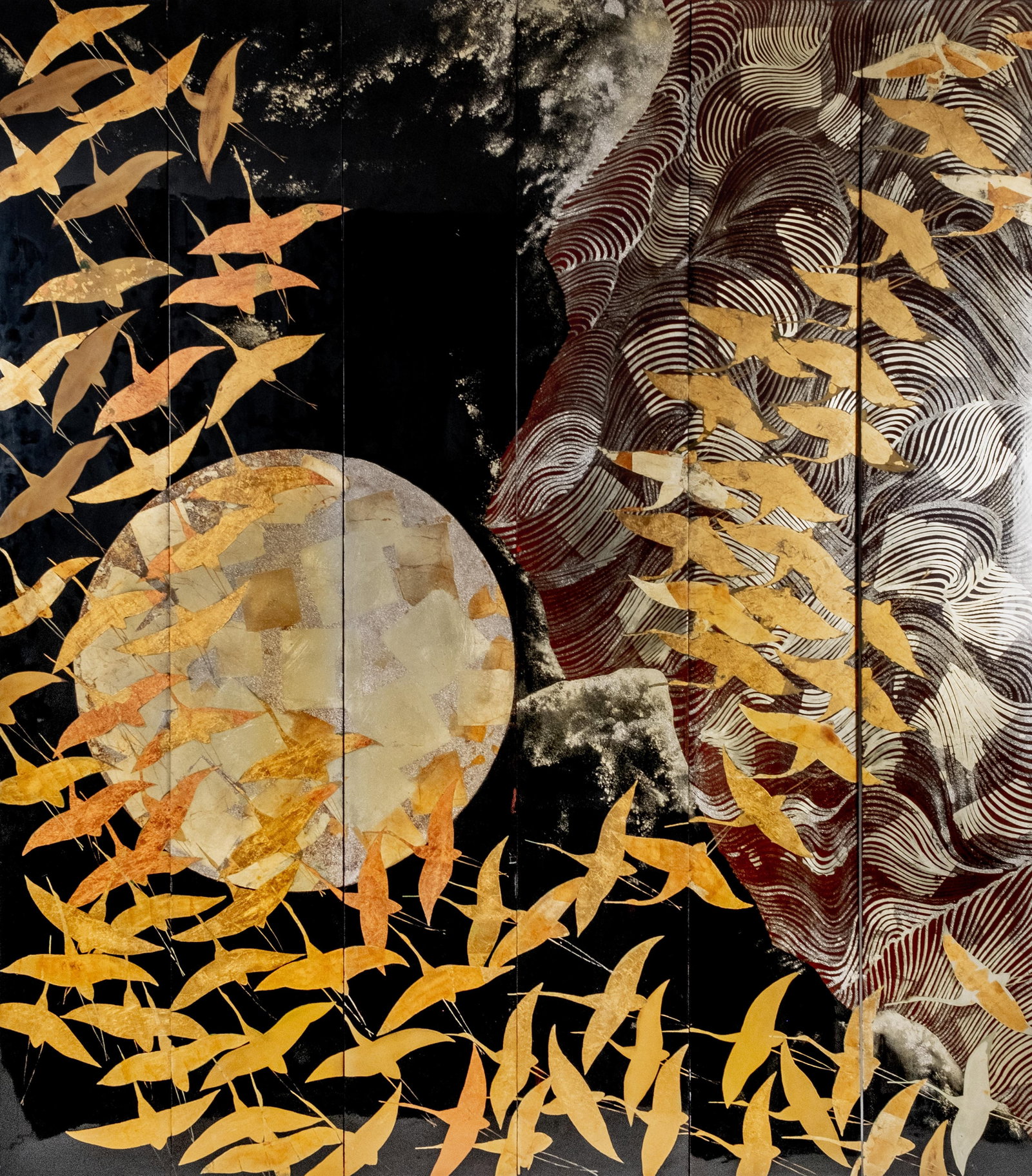
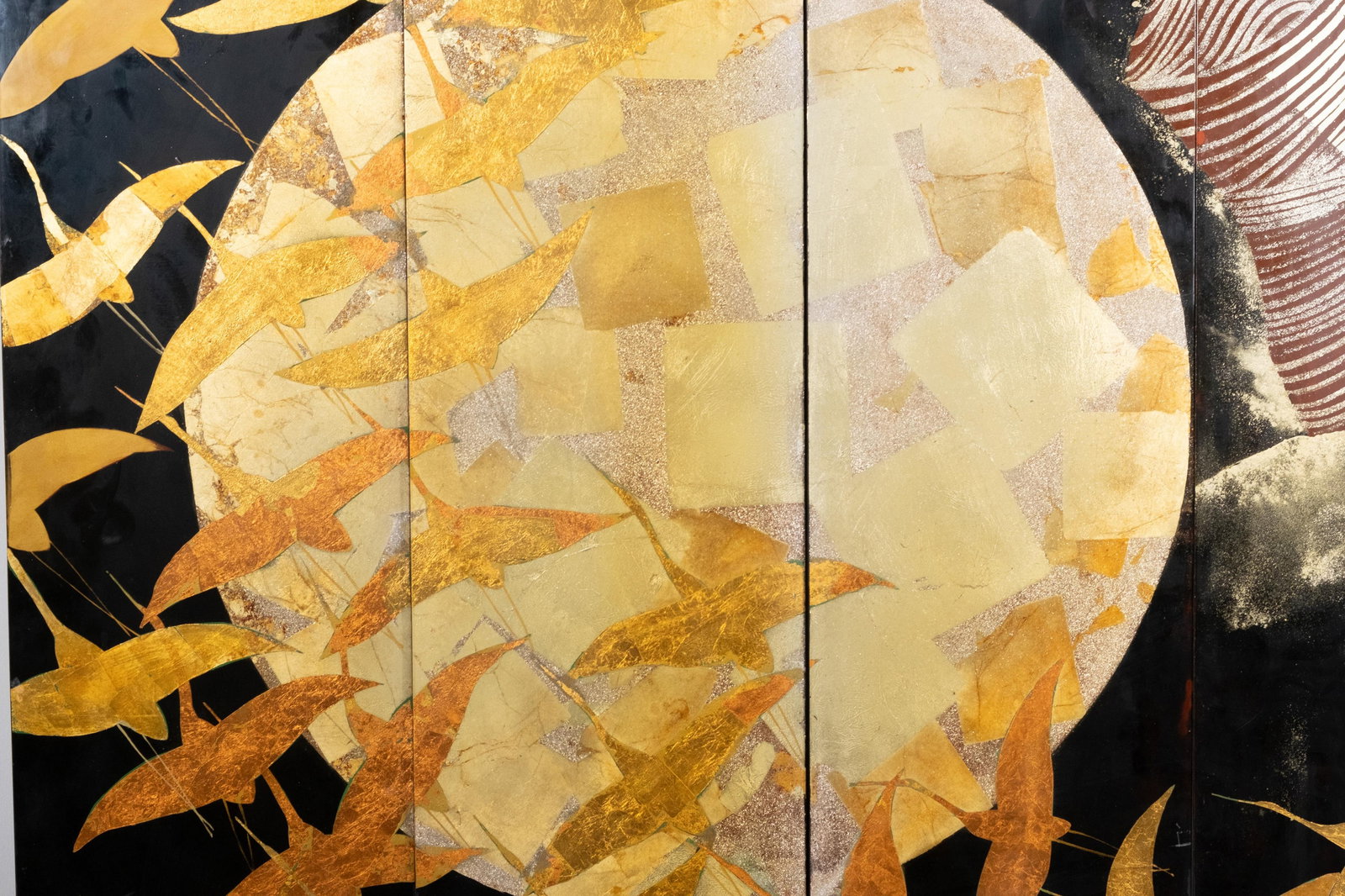
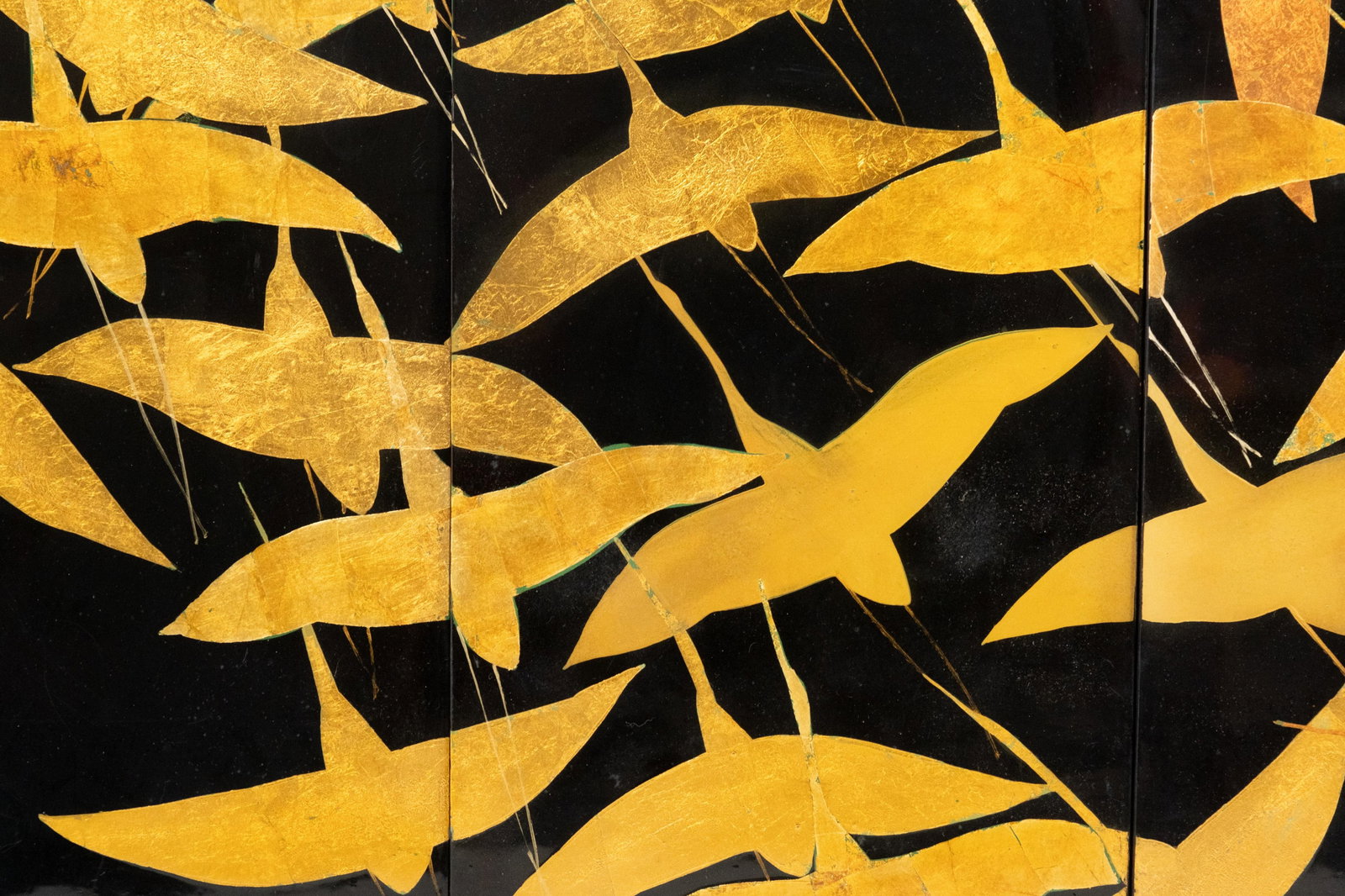
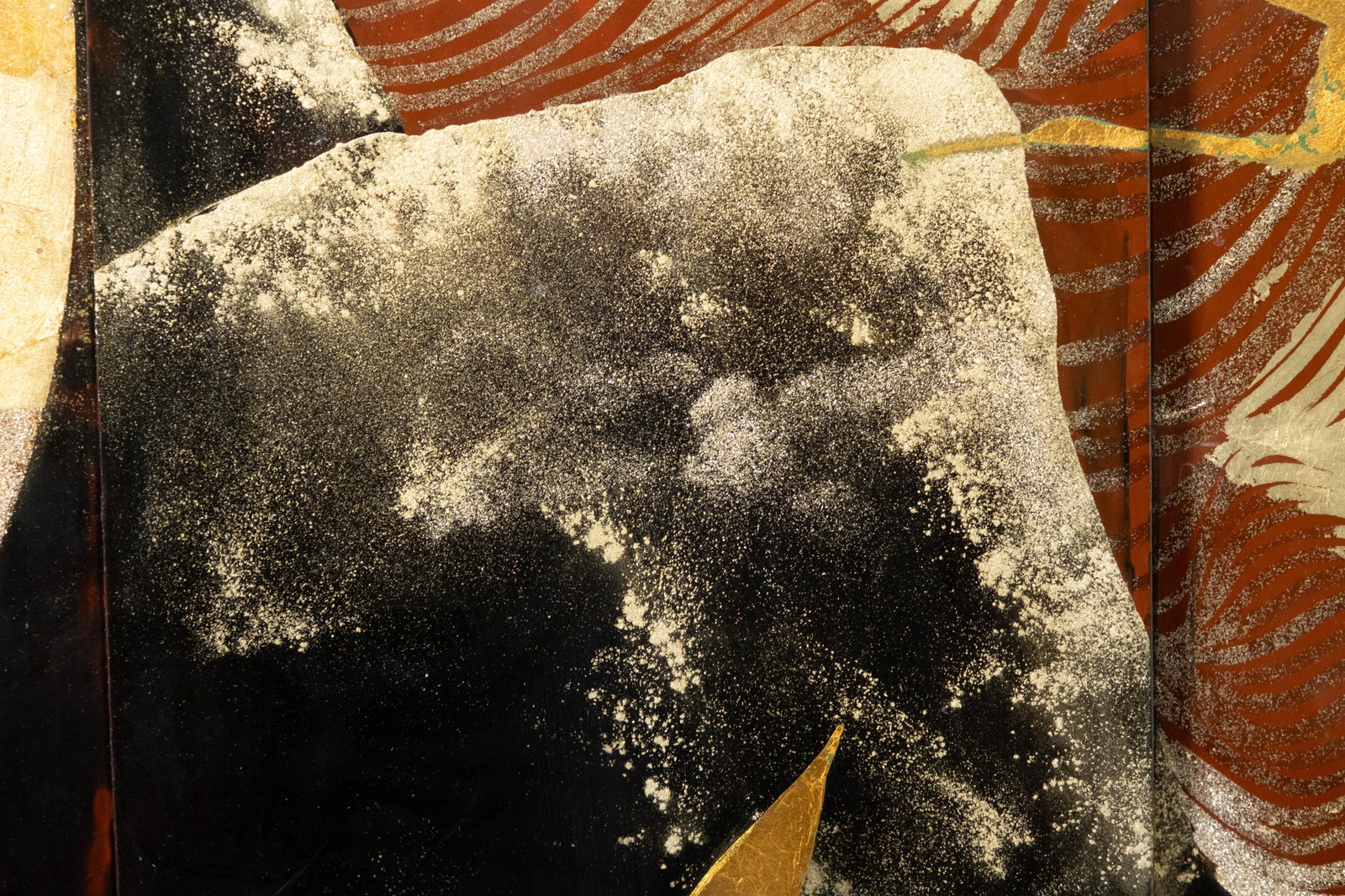
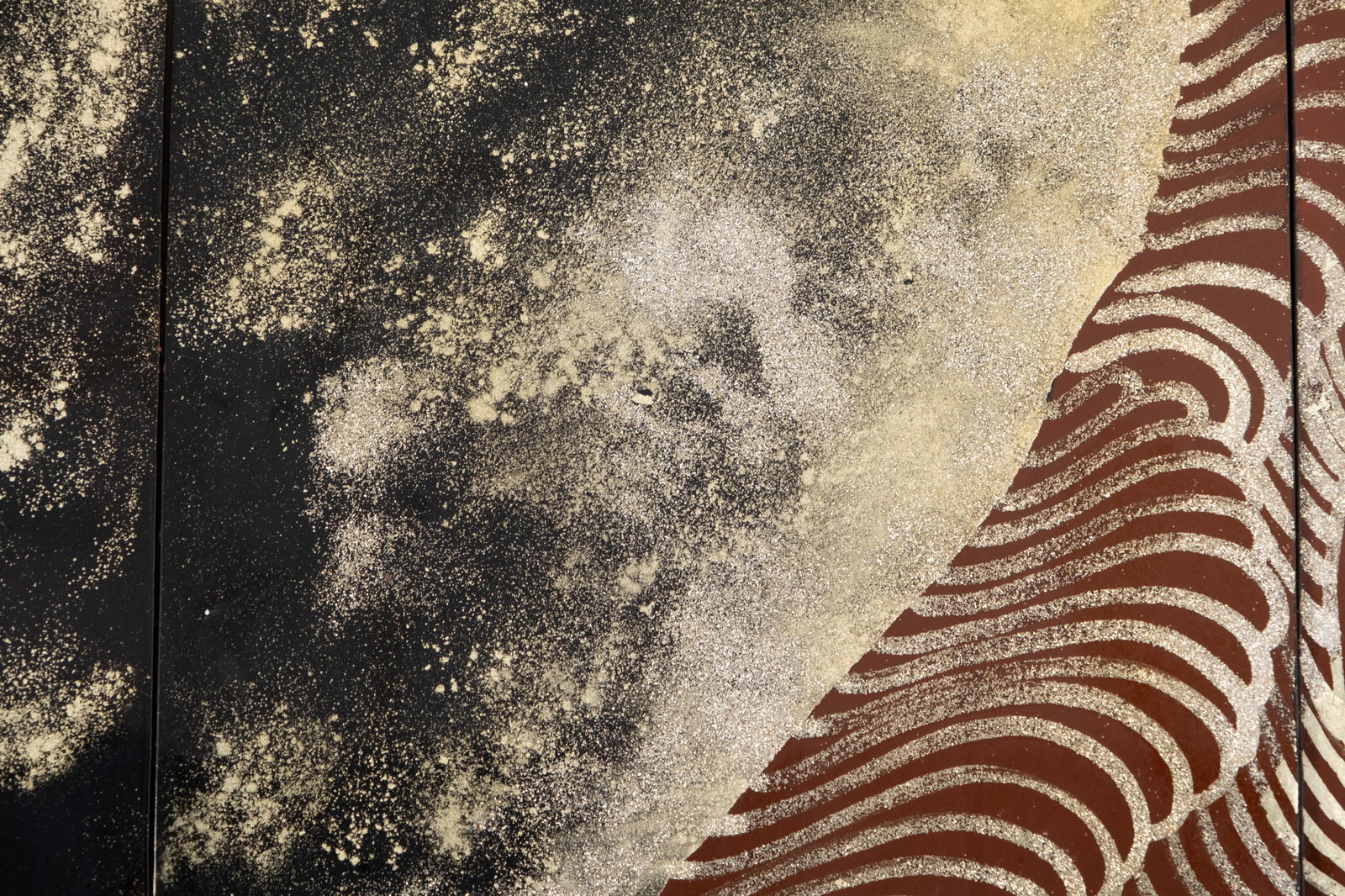
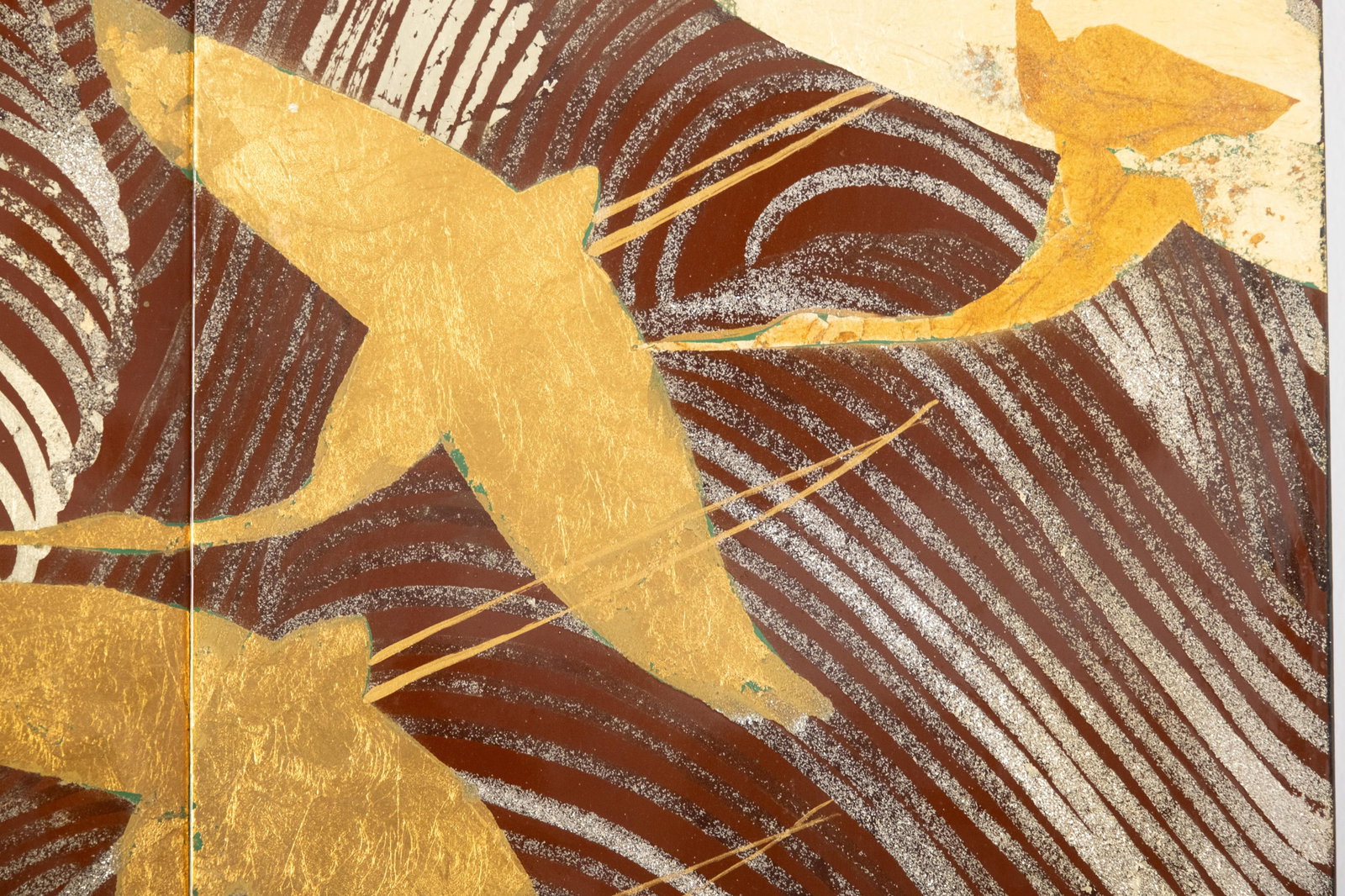
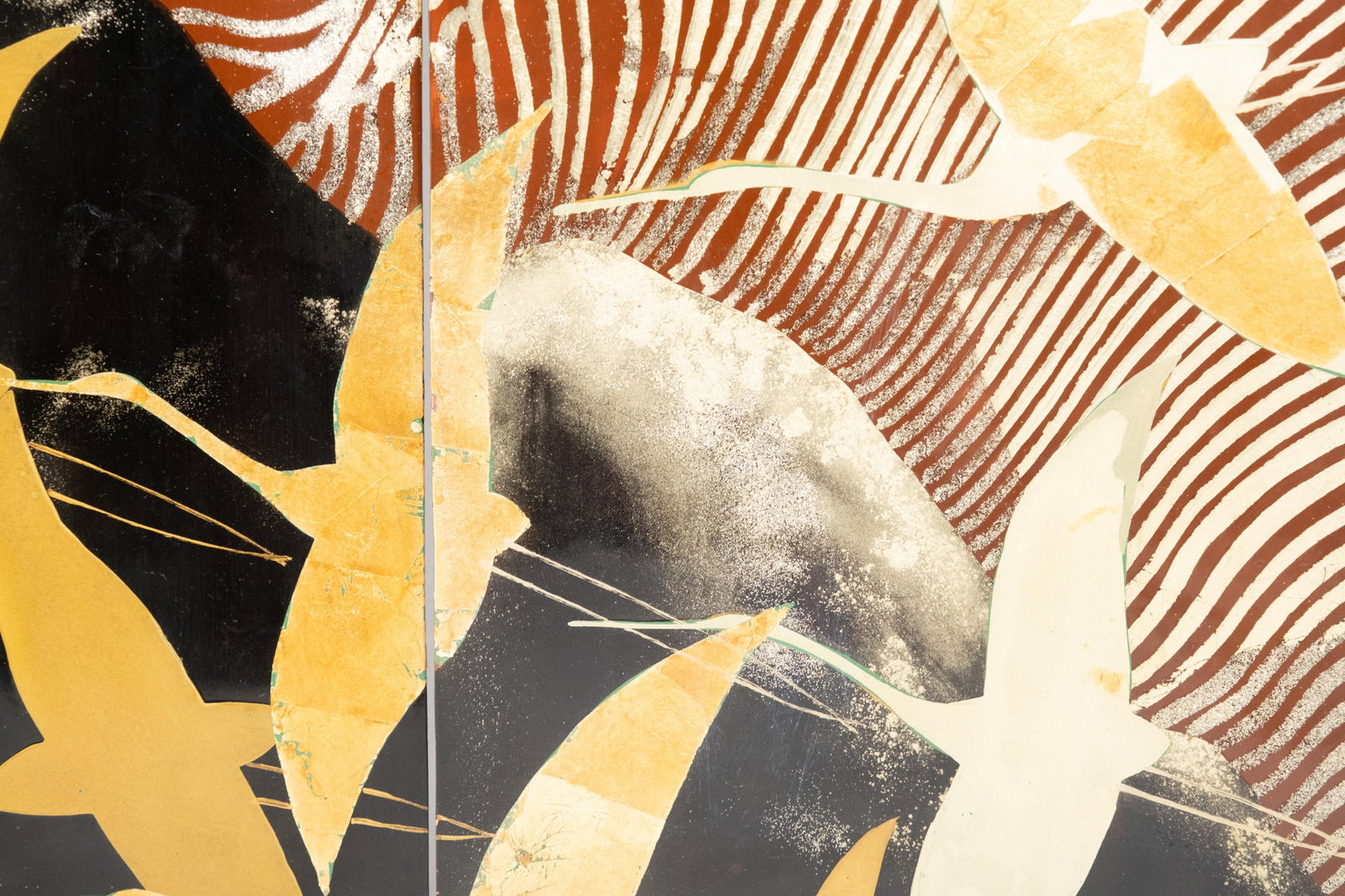
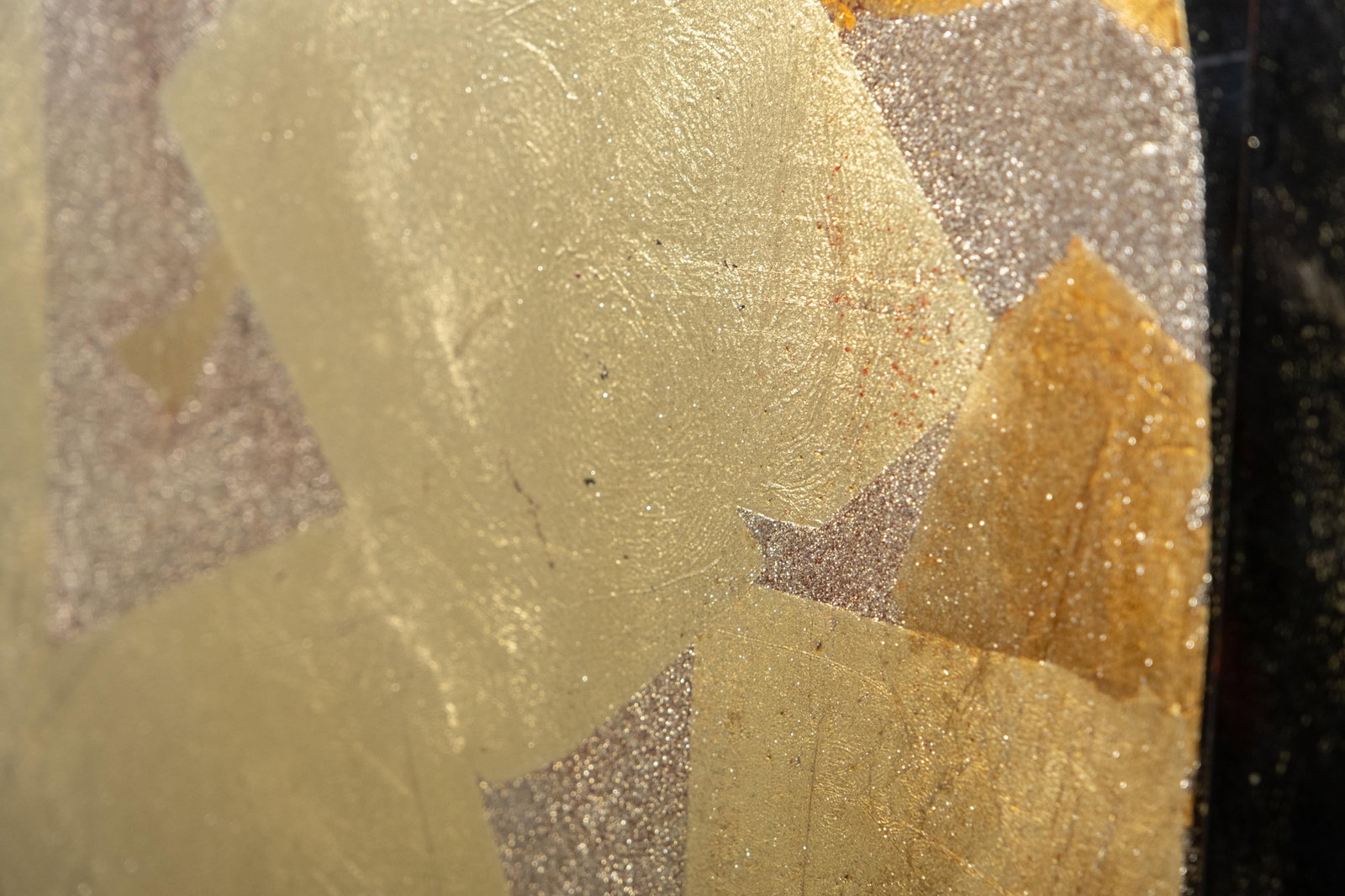
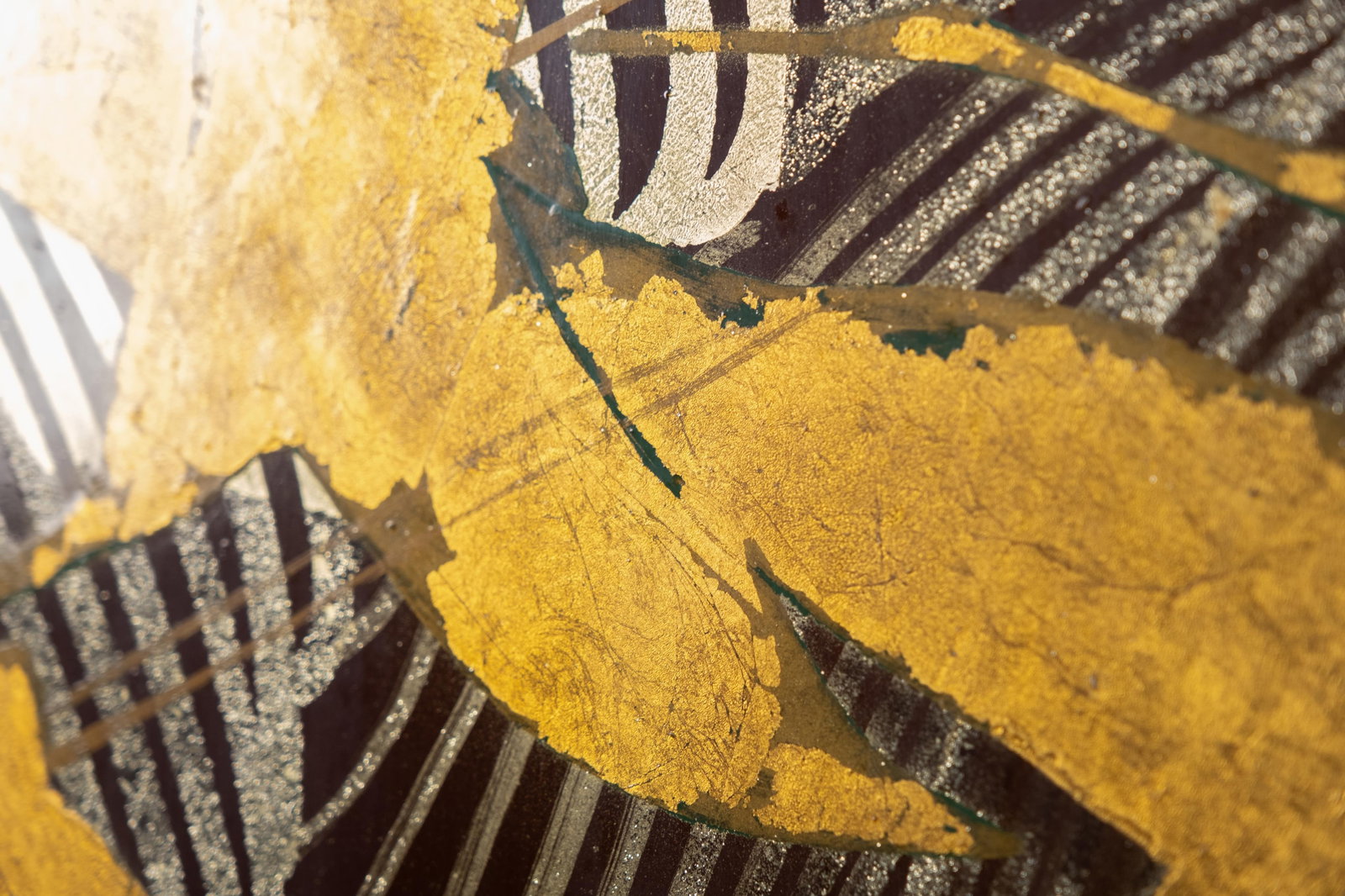
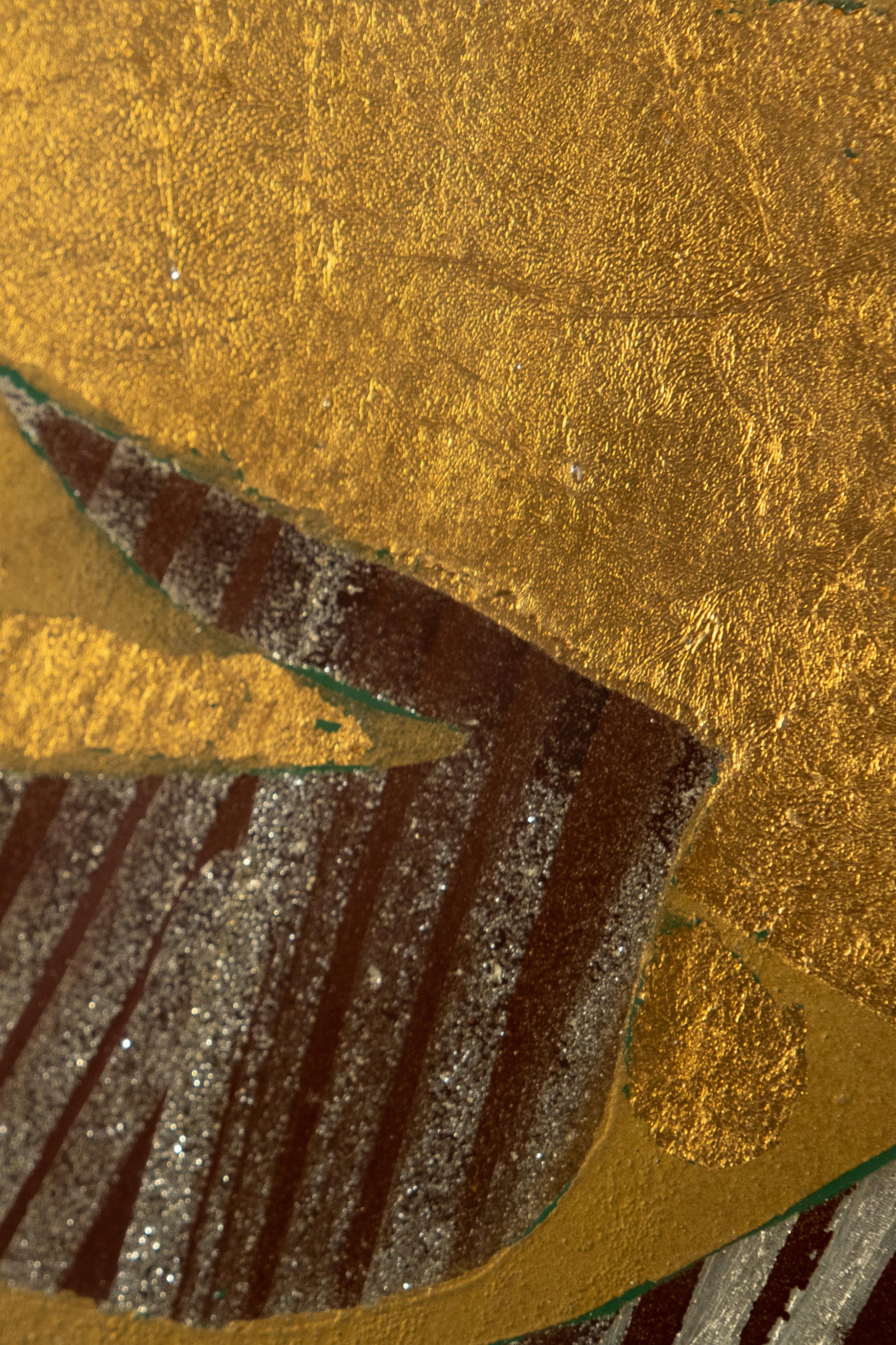
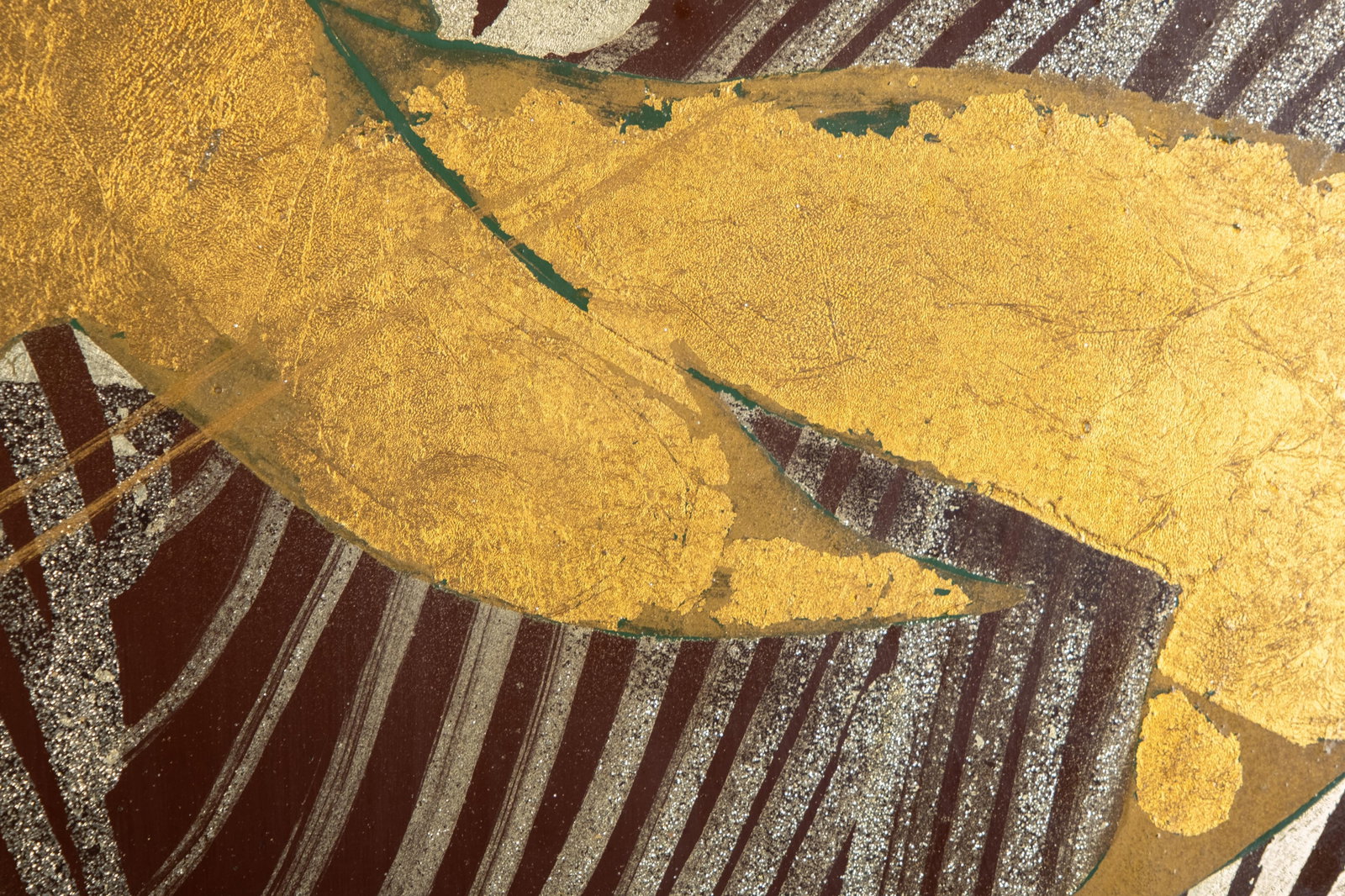
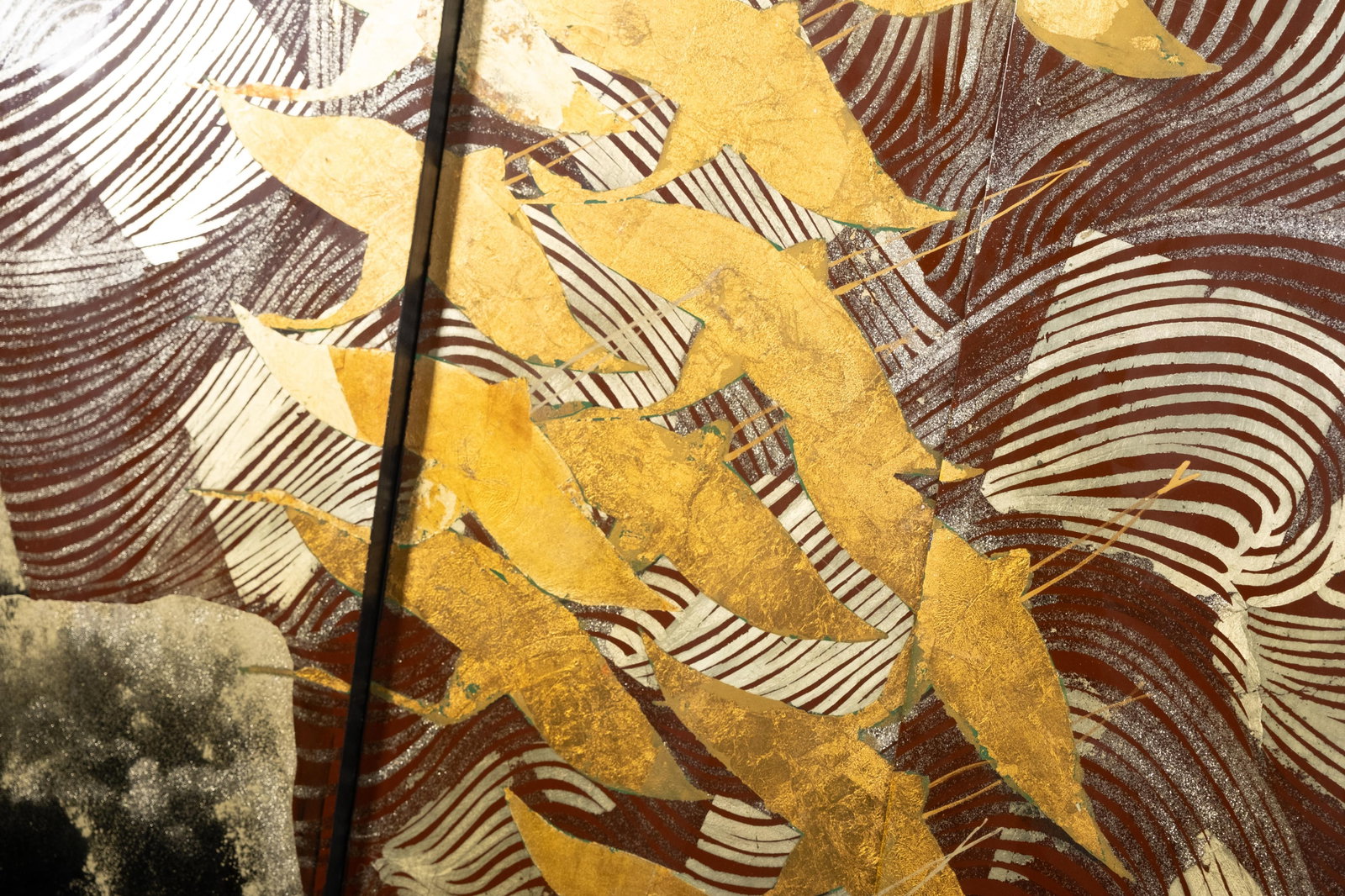
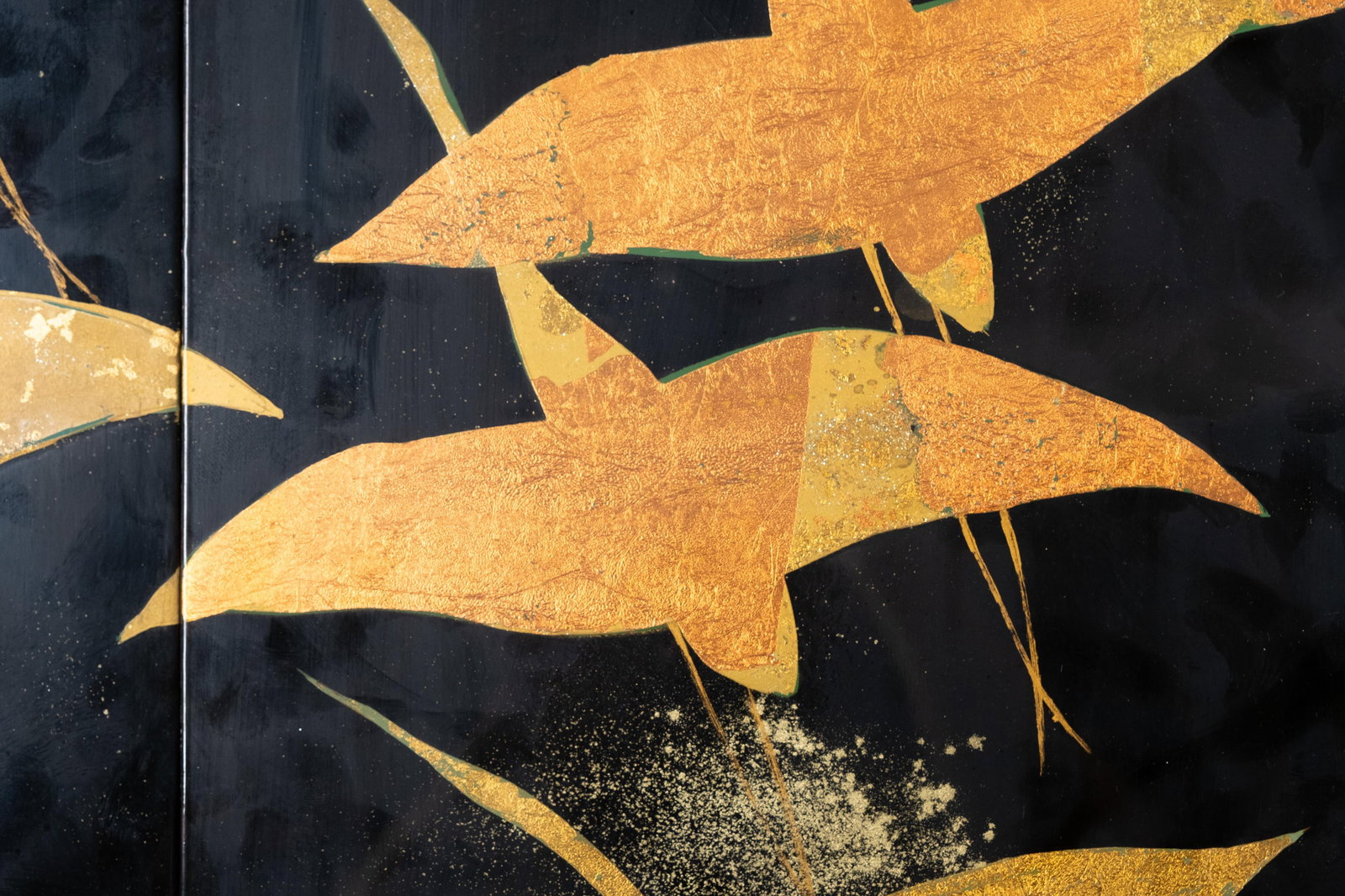
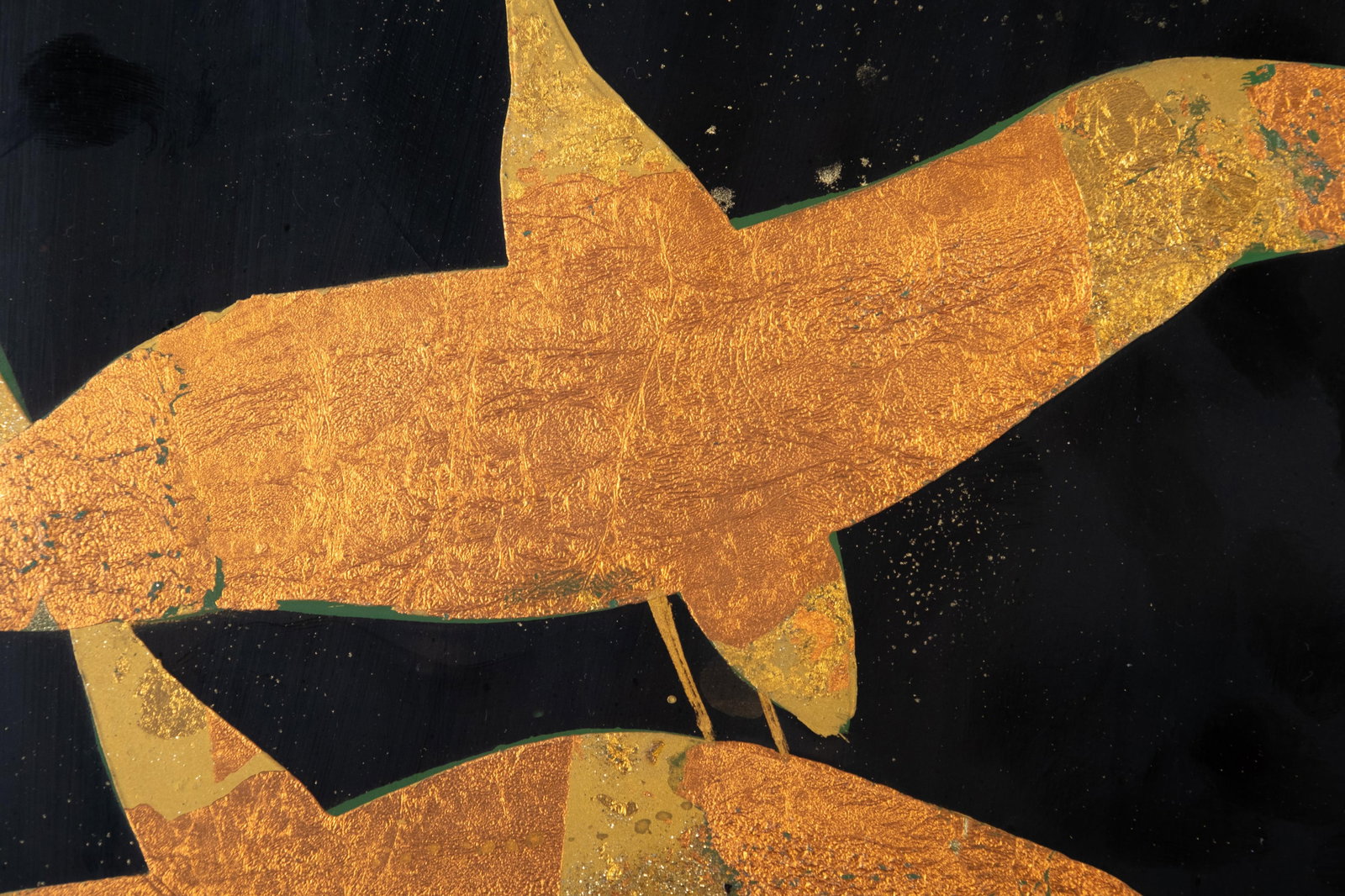
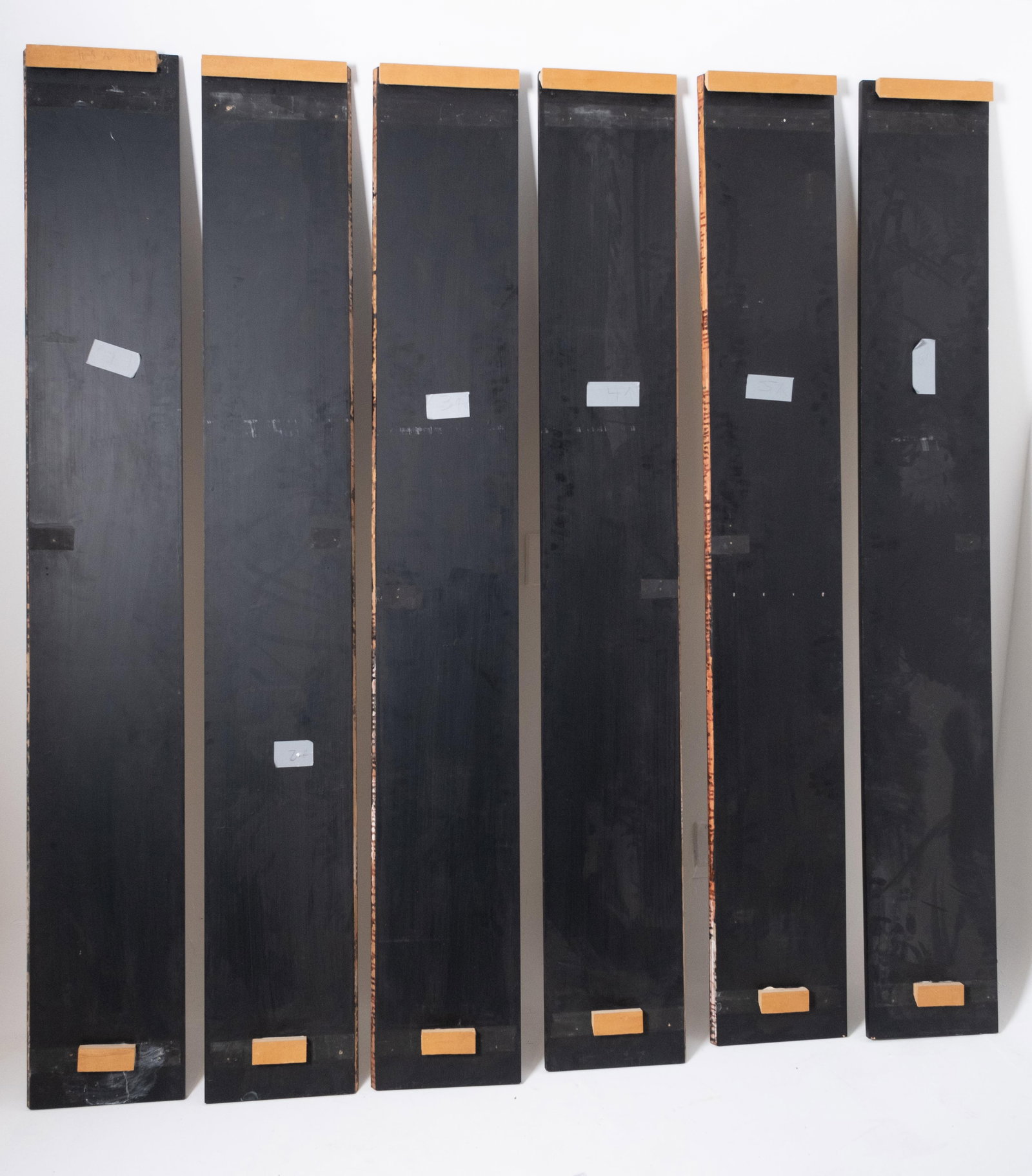
Important, wonderful, and rare Kayama Matazo (Japanese, 1927–2004) six-panel lacquer hand-painted screen, A Thousand Cranes. Black lacquer with applied gold leaf and silver leaf foil on wood panels. Like many of his works, this piece is unsigned, though its attribution is not in question.
History: Nihonga painter Kayama Matazo was honored as a Living National Treasure and was a recipient of the Order of Cultural Merit. His works seldom become available in the United States. This piece belongs to a larger and well-known body of work. After witnessing the spectacle of thousands of cranes taking flight during the winter in the Izumi region of Kagoshima Prefecture, Kayama drew upon the artistic vocabulary of the Rimpa School to depict his subject. With the sun and moon on either side, the cranes are arranged in groups against a pattern of surging waves, moving in a spiral-like formation from right to left. The belt of cranes, based on repeated patterns, was clearly inspired by Tawaraya Sotatsu’s Poem Scroll with Underpainting of Cranes (17th century, Kyoto National Museum Collection), but the majestic use of space in this work is uniquely Kayama’s.
(Presents well and is in good condition. The 2nd Panel from right bowes inward.)
Provenance: The Collection of Olga and Arthur Rankin. The work can be seen in a photograph published in a New York Post article, hanging on the wall of the Rankins’ bedroom in their duplex penthouse at 24 East 55th Street, New York City. Arthur Rankin was a noted director and producer. He began his career as an art director for the American Broadcasting Company in the 1940s. In 1955, he and Jules Bass formed the production company Videocraft International to produce television commercials. In 1960, they moved into animation, and in 1968 changed the company’s name to Rankin/Bass Productions. The two worked closely together for many years, co-directing and producing a wide array of features and cartoons. In 1977, Rankin and Bass produced a version of J. R. R. Tolkien’s The Hobbit, for which they received the Peabody Award.
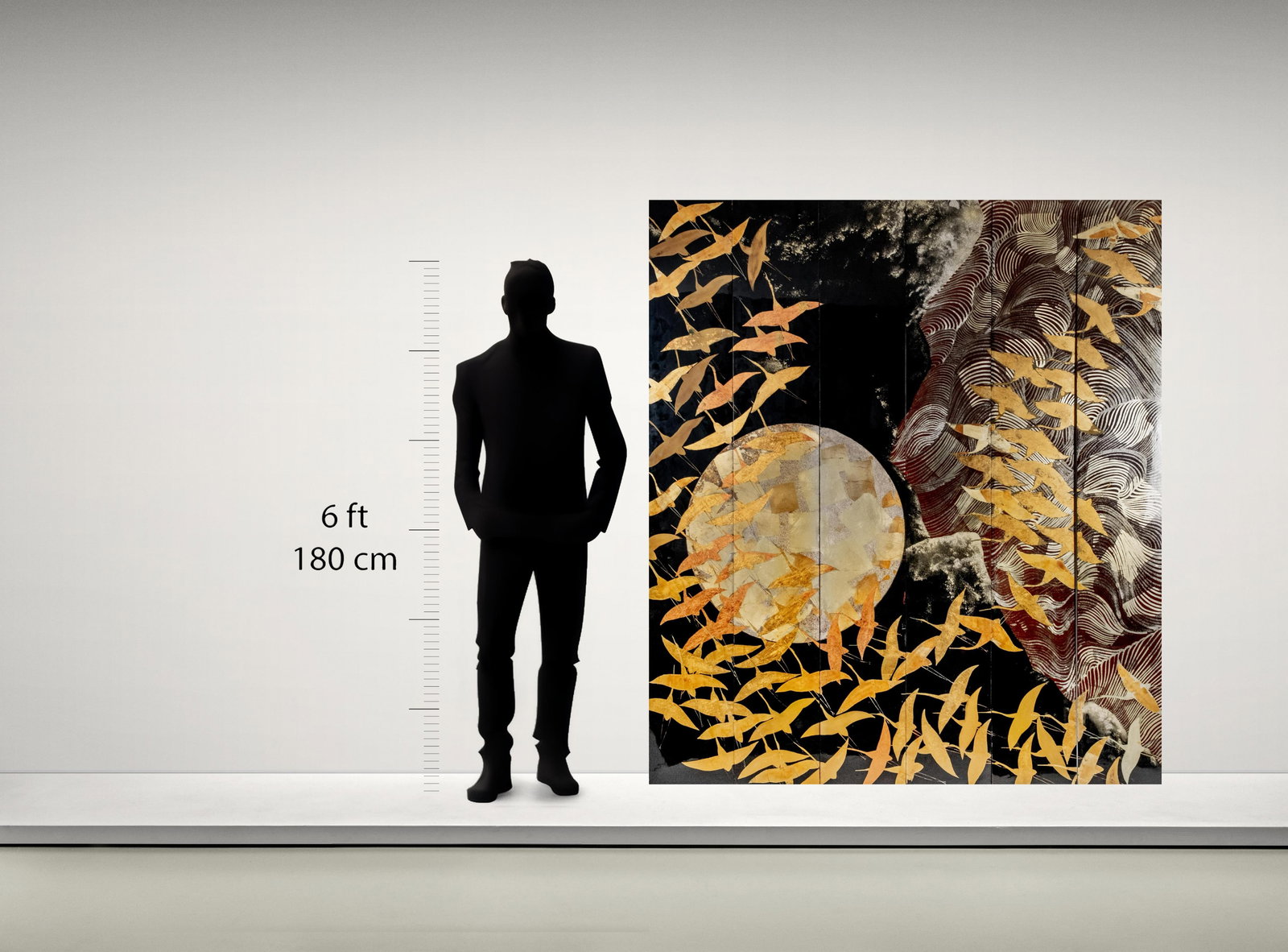
Measurement: Panels Each: 78 x 11 3/8 in. (198.1 x 28.9 cm.), All Inclusive: 78 x 68 1/4 in. (198.1 x 173.4 cm.) Approx
Condition: All descriptions and statements are our opinions and are not guarantees. Bidders are encouraged to carefully review all photographs and, when possible, to examine items in person prior to bidding. By placing a bid, you acknowledge and agree to the Terms and Conditions of Sale.
All items are sold as is and may show signs of age, use, wear, or prior restoration. Photographs form an integral part of each lot’s description. The absence of a condition report or notation does not imply that an item is free from defects or in perfect condition.
Clocks and watches are not guaranteed to be in working order. We strongly recommend that all vintage lighting be professionally rewired prior to use.
Unless explicitly stated, items do not include certificates of authenticity, provenance documentation, or other supporting materials.
As with other galleries reselling works, we are not authorized to issue Certificates of Authenticity. Such certificates may only be issued by artists, makers, or galleries representing and selling works directly from the artist or estate, when authorized to do so. Due to liability considerations, many artist foundations and estates no longer provide authentication services.
Accordingly, all works are offered and sold as is and as attributed to the artist or maker named in the description. These attributions reflect our best professional judgment and are intended to provide collectors, researchers, and institutions the opportunity to study and further contextualize the material offered. Attributions remain open to future scholarly research or professional evaluation that may further establish a work’s art-historical or market significance.
Share this lot: